Types of High Heels and How to Wear Them
Updated on:
High heels have been a staple of American style for decades, and it’s easy to see why. The right pair can instantly make an outfit feel more polished, more confident, or more occasion-ready. But when you look at all the types of high heels out there, it helps to know which styles suit your plans, your outfit, and your comfort preferences best.
That’s where smart design matters. At Clarks, style never has to come at the expense of comfort. From premium materials to cushioning technologies like Contour Cushion, today’s heels can do much more to support your feet through workdays, weddings, parties, and everything in between.
Who invented high heels?
If you’ve ever wondered who invented high heels, the answer goes back much further than modern fashion. According to museum and history sources, heeled footwear is believed to have origins in Persia, where cavalry soldiers wore heels to help keep their feet secure in stirrups while riding. Heels later made their way into Europe, where aristocrats and royalty adopted them as symbols of status and style. Figures such as Louis XIV helped cement heels as a fashion statement, and over time they evolved into the many women’s styles we know today.
Types of high heels: the most common styles
There isn’t one fixed number for how many high heel styles exist, because designers are always reworking classic shapes. Still, most women’s dress shoes fall into a handful of core categories. These are the most common heel types to know.
Stilettos
Stilettos are the classic high, narrow heel. They usually range from about 3 to 4 inches, sometimes higher. They create a sharp, elegant silhouette and are often chosen for parties, formal events, and dressier evening looks.
Pair stilettos with:
- Cocktail dresses
- Tailored pants
- Sleek midi skirts
Comfort-wise, they tend to be less forgiving than wider heel shapes because the weight is concentrated on a smaller base.
Kitten heels
Kitten heels are short, slim heels that usually measure around 1.5 to 2 inches. They offer some lift without the height of a stiletto, which makes them a great option for office dressing, weddings, dinners, and events where you’ll be on your feet longer.
Style kitten heels with:
- Ankle-length pants
- Slip dresses
- Midi hemlines
For many people, kitten heels feel easier to manage than higher, narrower styles.
Block heels
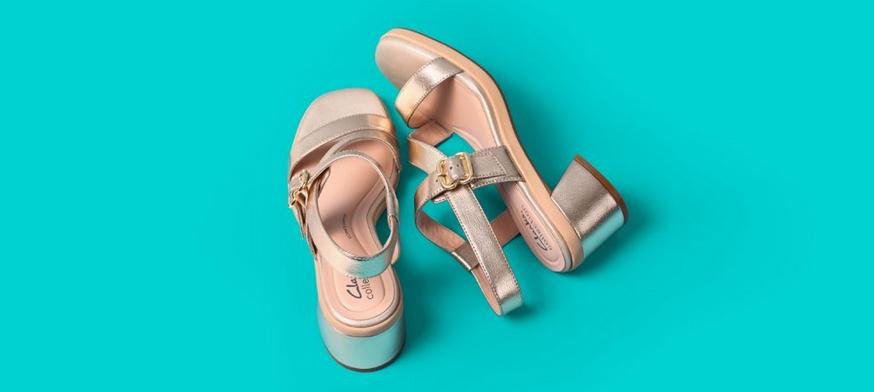
Block heels have a wider, more stable shape, often in heights from 2 to 3.5 inches. They’re one of the easiest heel styles to wear because the broader base helps with balance. They work across the board for offices, brunches, daytime events, and evenings out.
Pair block heels with:
- Jeans
- Jumpsuits
- Workwear
- Occasion dresses
If comfort is a priority, this is often one of the best places to start. Clarks’ women’s heels selection includes block heels, heeled sandals, and Mary Janes designed with comfort in mind.
Wedges
Wedges lift the heel and sole in one continuous shape, spreading weight more evenly under the foot. Heights vary, but many fall in the mid-height range. They’re ideal for outdoor events, vacations, and warm-weather dressing because they can feel more stable than a narrow heel.
Wedges look great with:
- Maxi dresses
- Cropped pants
- Summer tailoring.
Platforms
Platform heels add extra height under the front of the foot as well as the heel, reducing the pitch compared with a non-platform shoe of the same total height. That can make them feel more manageable for nights out or statement looks.
Style platforms with:
- Wide-leg pants
- Party dresses
Slingbacks
Slingbacks feature a strap around the back of the heel. They can come with kitten, block, or higher heels, so the feel depends on the construction. They’re a smart choice for work, weddings, and dressy day events, especially when you want an airy look without going fully open-toe.
Mules
Mules are backless heels, available in everything from low kitten heels to chunky block heels.
They’re easy to slip on and can look effortlessly polished with:
- Tailored separates
- Denim
- Occasionwear
Because they don’t secure the foot in the same way as a strap or closed-back style, fit becomes especially important.
How to Walk in High Heels
Learning how to walk in high heels gets easier with a few simple habits.
Start by standing tall. Keep your shoulders relaxed, your chest open, and your core gently engaged. Good posture helps distribute weight more evenly and keeps you from leaning too far forward.
Next, shorten your stride slightly. Small, controlled steps usually look more natural in heels than trying to walk exactly as you would in sneakers or flats. Land heel first, then roll through the foot where the shoe design allows.
It also helps to choose the right height. For many women, the most comfortable heel size is often in the low-to-mid range—around 1 to 2 inches—especially for longer wear.
If you’re trying to figure out how to wear high heels without feet hurting, focus on shoe construction as much as style.
Look for:
- cushioning under the ball of the foot
- a secure fit that keeps your foot from sliding forward
- a stable heel shape such as a block heel or wedge
- enough room in the toe box
- grippy soles for traction
How to Style High Heels
When it comes to how to style high heels, matching the heel shape to the occasion usually gives the best result.
For work, mid-height pumps, Mary Janes, and block heels are easy winners. They feel polished without looking overdone, especially with tailored pants, midi skirts, or a simple sheath dress. Clarks styles like Shaya Poppy and Shaya Jane are positioned as office-ready options with easy-walk heels and Contour Cushion support.
For parties and evening events, pointed courts, slingbacks, and dressy heeled sandals bring a more elevated feel. Pair them with satin separates, slip dresses, or a dark tailored suit for a look that feels modern but easy.
For weddings, strappy heels, slingbacks, and dressy sandals are classic choices. Clarks’ own wedding guest guide highlights options like pointed-toe pumps, slingback heels, and strappy heels for different dress codes and venues.
For casual outings, block-heeled sandals, wedges, and low mules can be the sweet spot. They add height without feeling too formal, and they work with denim, wide-leg trousers, and relaxed dresses.
Health and Comfort FAQs
Q: Can you wear heels with scoliosis?
A: Possibly, but it depends on the person, the severity of symptoms, and what your clinician recommends. Because heels can change posture and shift weight distribution, they may aggravate back discomfort for some people with scoliosis. This is one to discuss with your doctor, podiatrist, or physical therapist—especially if heels increase pain.
Q: Can wearing heels cause tendonitis?
A: Heels do not automatically cause tendonitis, but shoes that place repeated stress on the foot and ankle can contribute to irritation in some people. Tendonitis is often linked to repeated motions or awkward positions, and Achilles tendonitis can develop from repeated stress on the tendon.
Q: Do low heels hurt less?
A: For many people, yes. Lower heels usually create less pressure on the forefoot and may feel easier to balance in than very high heels. The exact comfort level still depends on fit, cushioning, and heel shape.
Q: What is the most comfortable heel size to wear?
A: A low-to-mid heel is often the easiest for longer wear, especially around 1 to 2 inches. A stable block heel or wedge can also feel more comfortable than a tall, narrow heel. Fit and support matter just as much as the number.
The best heels are the ones that work with your life, not against it. Once you understand the main types of high heels, it becomes much easier to choose a pair that suits the occasion, complements your outfit, and supports your comfort level. Whether you’re comparing kitten heels and stilettos, learning how to walk in high heels, or figuring out how to style high heels for work or a special event, the goal is the same: confidence you can actually enjoy wearing.