Kingston to Carnaby Street: The Desert Boot's Cultural Journey
Published on:
Some shoes are designed, released and remembered largely in the form their maker intended. Others leave the factory and take on meanings that no design team could have planned.
The Clarks Desert Boot belongs to the second group. Launched by Clarks in 1950, it travelled into different communities, music scenes and ways of dressing. Its cultural story was built by the people who chose to wear it.
What Makes a Desert Boot?
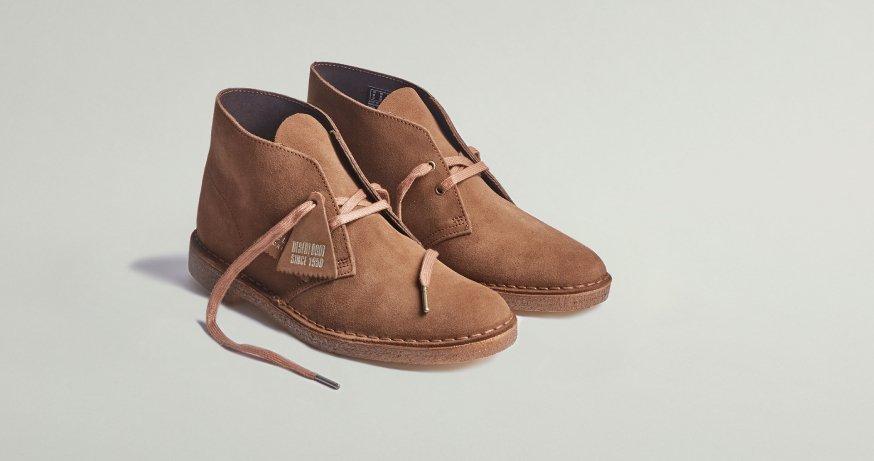
What are desert boots? The Clarks Originals Desert Boot is an ankle-height boot defined by a pared-back upper, a small number of eyelets and a crepe sole.
Nathan Clark designed the shoe and Clarks launched it in 1950. He took his inspiration from the rough, crepe-soled suede boots that British officers had made in Cairo’s Old Bazaar during the Second World War.
It was an understated design from the beginning. That simplicity made it open to interpretation as it travelled far beyond Somerset.
Kingston: How Clarks Became a Status Shoe in Jamaica
The relationship between Clarks and Jamaica became much bigger than one model.
Clarks shoes were taken up as valued pieces of dress, particularly within urban style and music culture. A clean pair could communicate care in how someone presented themselves, and Clarks became closely associated with the sharp dressing around Jamaican sound-system culture.
The rude boy subculture of 1960s Jamaica was part of that story.
Ska, rocksteady and later reggae all developed around communities in which music, dancing and dress were closely connected. Shoes were part of the complete look, and Clarks became one of the names that carried social meaning within it.
The Desert Boot was part of that look, and as the range grew, the Wallabee became especially prominent too.
That wider story explains why “Clarks Jamaica” means more than the export of a British shoe. The significance came from the people wearing the footwear, the choices they made around it and the cultural settings in which it became recognisable.
Carnaby Street: The Mod Years
Around the same time, the Desert Boot found a different place in 1960s London, where Carnaby Street had become a centre of mod style. Mod fashion was deliberately precise. Clean trousers, close proportions and carefully chosen footwear formed part of a look in which small details mattered.
The Desert Boot fitted naturally into that approach. Its low-profile construction and uncluttered upper worked with sharply cut trousers without adding the formality of a traditional dress shoe.
Kingston and London each gave Clarks footwear different meanings, shaped by their own music, streets and social worlds.
Two Scenes Meet: The Windrush Connection
Britain's post-war relationship with the Caribbean changed British culture from within.
People from Jamaica and other Caribbean countries who came to Britain as part of the Windrush generation brought music, records, ways of dressing and cultural knowledge with them. Their children grew up within British cities while maintaining connections to Caribbean culture.
Music was one of the spaces where those influences became visible. Jamaican sound-system culture, ska and reggae became part of Britain's musical landscape, meeting existing youth cultures rather than remaining separate from them.
That connection also brought different ways of wearing Clarks into the same streets.
A shoe that had become part of a carefully put-together look in Jamaica could sit alongside a Desert Boot already familiar within British youth style.
By the late 1970s, the ska revival brought the two scenes together. Its bands and fans mixed mod tailoring with rude boy style, and the Desert Boot belonged to both.
Through the Decades
The Desert Boot didn’t stay fixed in the 1960s. It turned up again in Britpop in the 1990s, while the Wallabee found a new audience in hip-hop.
Its shape continued to move through music scenes and street style because it could change context without losing its basic identity. Worn with tailored trousers, denim or more relaxed clothing, the same construction could read differently from one generation to the next.
The wider Clarks family moved in similar ways. Different styles became significant within different communities, sometimes far from the settings in which they were first designed.
That is part of why a cultural history of footwear cannot be told entirely from an archive.
Clarks holds more than 22,000 styles, and the company remains based in Street, Somerset. But a physical archive can document the shoe itself more easily than every meaning people attach to it once it reaches the street.
The rest of the story happens through use.
How the Desert Boot Is Worn Now
Today, the Desert Boot can sit comfortably between smarter and more relaxed wardrobes.
A suede pair works naturally with denim, cord and casual trousers. Leather changes the surface and can bring the same uncluttered shape into a sharper outfit.
Its value now isn’t tied to a particular decade, and wearing it doesn’t require recreating a 1960s wardrobe.
The shoe has already moved through enough cultures to show that it does not need one prescribed uniform.
That same idea runs through Clarks Originals today. The Desert Boot and the Wallabee remain recognisable shapes while continuing to be worn in new combinations.
Care depends on the material. Suede and leather need different products, while the crepe sole needs care suited to its natural material. Our repair and resole guide covers care and the point at which professional repair may be worth considering.
The Desert Boot's cultural journey is not finished because culture is not finished with it. Its past explains why the shoe matters, but the most relevant question is still how people choose to wear it now.
FAQs about the Desert Boots
What Are Desert Boots?
Desert boots are ankle-height boots with a pared-back construction, traditionally using a small number of eyelets and a crepe sole. The Clarks Desert Boot was designed by Nathan Clark and launched in 1950.
Who Designed the Clarks Desert Boot?
Nathan Clark designed the Clarks Desert Boot, which launched in 1950. He based it on the rough suede boots with crepe soles that officers had made in Cairo’s Old Bazaar during the Second World War.
Why Are Clarks So Popular in Jamaica?
In 1960s Jamaica, a good pair of Clarks signalled pride in how you dressed. They were worn by rude boys and became closely tied to the island’s music scenes, an association that carried on through later generations.
What Is the Difference Between a Desert Boot and a Wallabee?
They are different Clarks Originals shapes. The Desert Boot is an ankle boot with a pared-back lace-up construction, while the Wallabee has a moccasin-inspired shape. Both have developed cultural lives far beyond their original product context.
How Do You Wear Desert Boots Today?
Wear them according to the wardrobe you have now rather than trying to reproduce one historical look. Suede works naturally with denim and relaxed trousers, while leather can sit comfortably with sharper pieces.